
Developed System
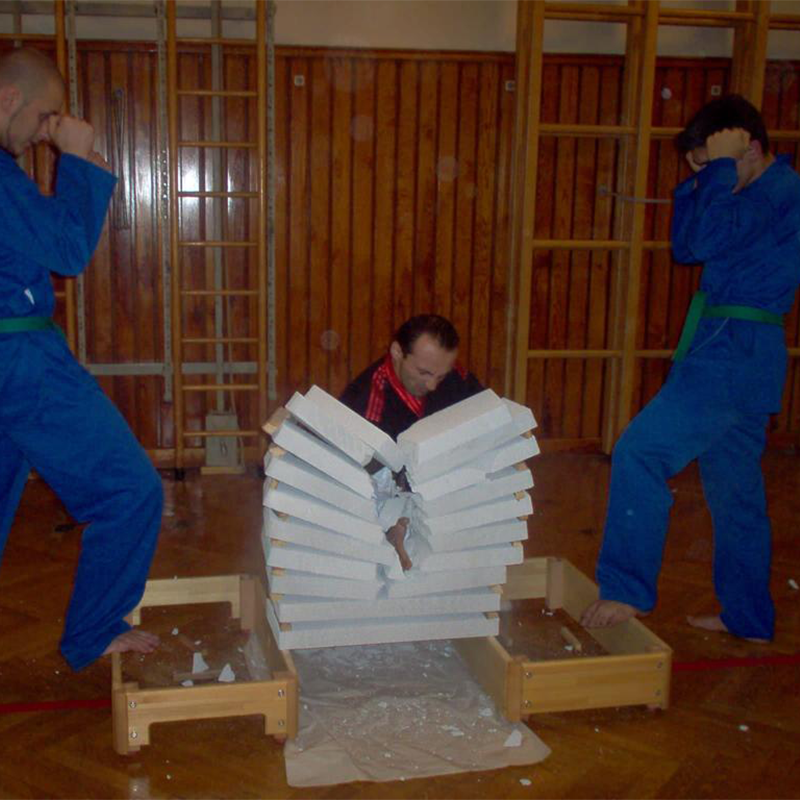
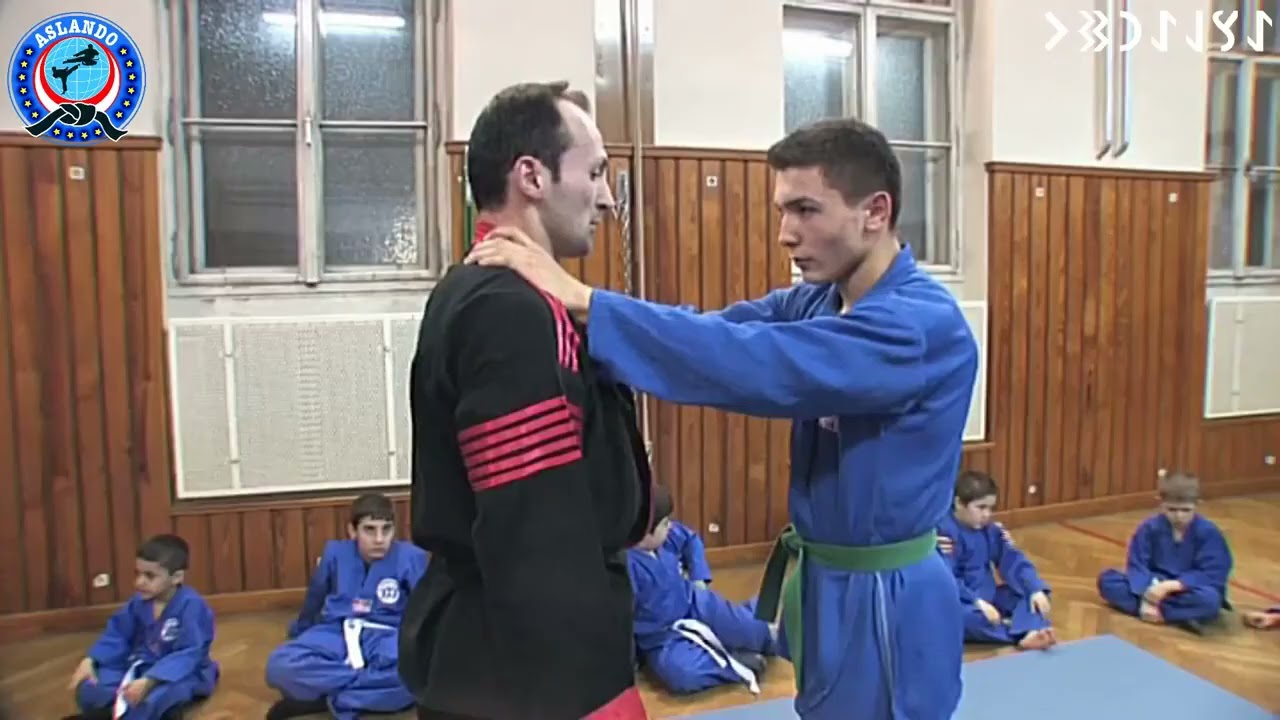
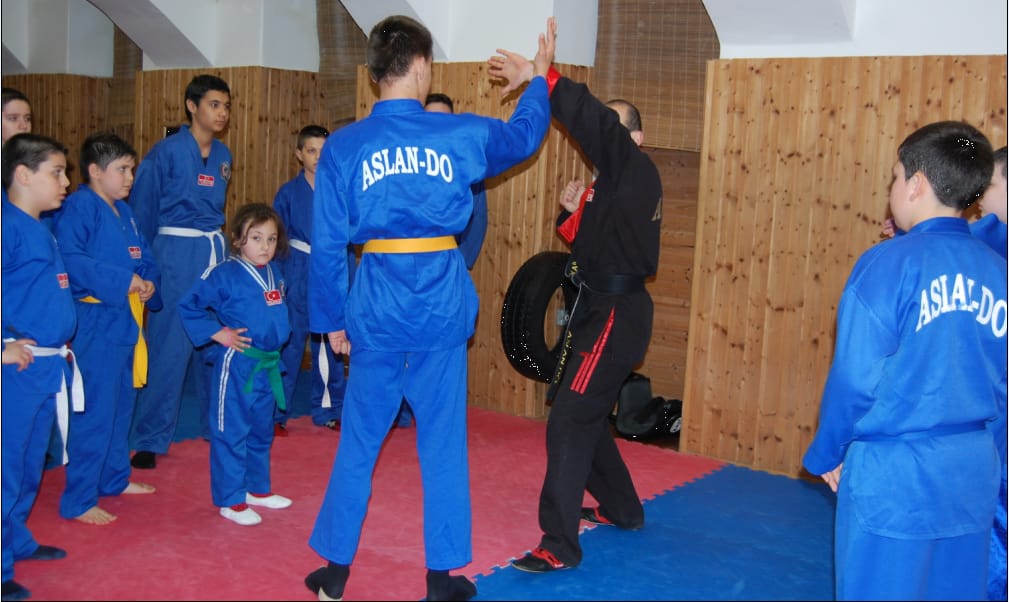
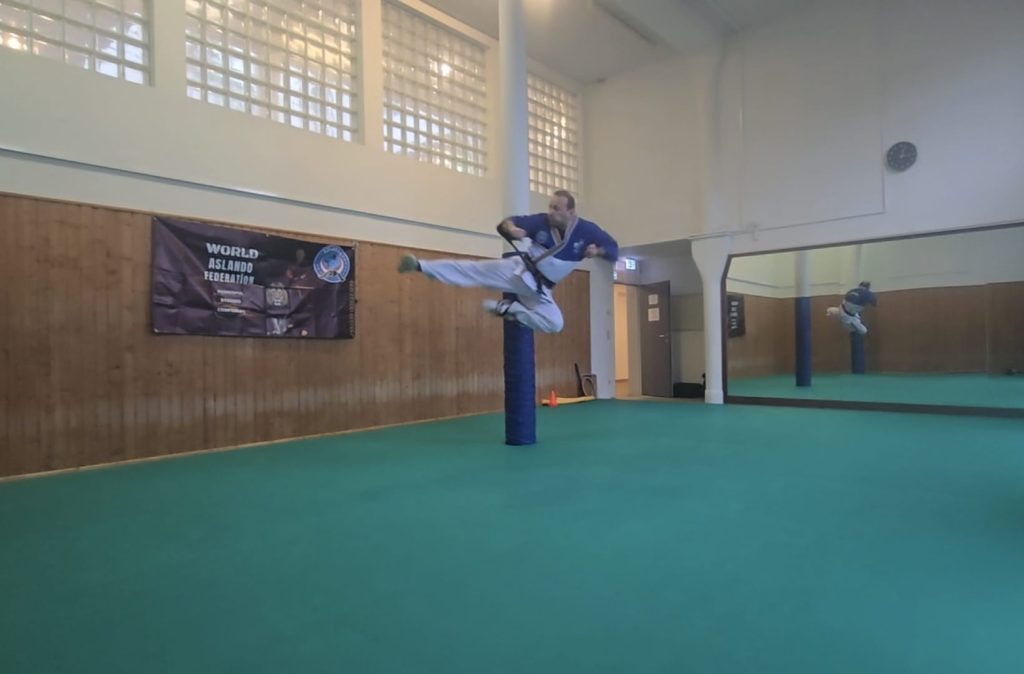
Aslando, literally meaning “The Way of the Lion” (Do = Way), refers to the strongest animal on land. Technically, it’s a Turkish martial art and self-defense technique that encompasses not only foot or hand techniques but also incorporates various techniques from other combat sports. Aslando is particularly taught to security forces and special operations units.
Aslando is not a purely physical martial art. Its essence stems from the desire to protect oneself against much stronger opponents. You can leverage your opponent’s attack, add your own strength, and redirect it back. It’s about neutralizing the opponent using their own energy. It means disrupting their movements and anticipation, taking advantage of their momentary surprise to render them ineffective. Naturally, it employs a scientific logic based on intelligent thinking and the elimination of unnecessary thoughts, while also striving to provide a safe environment for students to develop their skills. Aslando, a method of self-defense and protection, is a comprehensive spiritual and physical training program aimed at maximizing technical, tactical, mental, psychological, speed, endurance, strength/power, flexibility, and agility development while minimizing injury. It utilizes a 50% kick and 50% punch ratio. Naturally, Aslando is a realistic, fast, practical, and effective martial art based on intelligent thinking and the elimination of unnecessary thoughts from the mind. The Aslando system is not composed of monotonous movements, but of principles. An Aslando student learns to avoid unnecessary force, not to stand in the way of their opponent’s strength, to use the force applied to them to their advantage, to fight against multiple people simultaneously, and to be fluid and relaxed. It fosters harmony between body and mind. Techniques become reflexes through repeated practice. The training process in Aslando teaches concepts such as honesty, courtesy, patience, love, and respect. It develops the athlete’s intelligence and provides the ability to act independently. It brings vitality and agility to the human body. Thus, feelings of self-confidence, self-control, and concentration develop. The individual learns to act correctly and intelligently during combat. Aslando training is a method that provides success through practical intelligence, gives strength and normal power, and improves concentration. It develops human character, strengthens willpower and learning ability, and fosters tolerant behavior. The most important factor that distinguishes Aslando from others is that it works with the sensitive points of the human body. Aslando is generally practiced without the use of weapons. However, Aslando also includes training in using any visible and tangible object as a weapon. It has a special self-defense system developed against all kinds of armed and unarmed attacks. Regardless of body anatomy, a person who wants to practice Aslando can find a place for themselves in this system.
Looking at violent incidents, from assaults to the most horrific murders, there is often a senseless need for self-affirmation. However, an Aslando practitioner only defends themselves; because they are trained to neutralize their opponent, they don’t need to prove themselves. For them, proof is their sporting rank. An Aslando practitioner never uses deadly blows in a street fight. They may even accept some light blows if necessary.
Beginners may find the physical exercises and discipline of “Do” too demanding. If it weren’t for the philosophy of “Do,” people with aggressive feelings and thoughts would apply the techniques they’ve learned to anyone they encounter in daily life, leading to irreversible mistakes and becoming like ticking time bombs. “Do,” which sometimes seems meaningless, is actually very important. Aslando is a self-defense art using hands and feet, but it’s also a physical and spiritual motivation. Aslando is an art, and its greatest aim isn’t victory; it aims to mature a person’s morals and character.
Aslando is practiced barefoot and in a special uniform. As in many other martial arts and self-defense disciplines of Far Eastern origin, belts are worn over the uniform to indicate experience and mastery.
Belts: At the beginning, every Aslando practitioner is given a white belt. Over time, Aslando practitioners gain experience through training and competitions, and advance through certain examinations to reach higher belt levels. This changes the color of the belts. These belts are, in order: …………………………………… colors. To facilitate grading, there is also an intermediate belt between each two belts.
The black belt is the highest belt level. However, black belts also have grades. These are: 1st Dan (San), 2nd Dan (San), 3rd Dan (San), 4th Dan (San), 5th Dan (San), 6th Dan (San), 7th Dan (San), 8th Dan (San), 9th Dan (San), and 10th Dan (San).